
The Western Frontier
The 1965 arc, from the Rann of Kutch through Kashmir to the plains of Punjab, where India and Pakistan fought a war that ended in stalemate after opening on multiple fronts at once.
The works
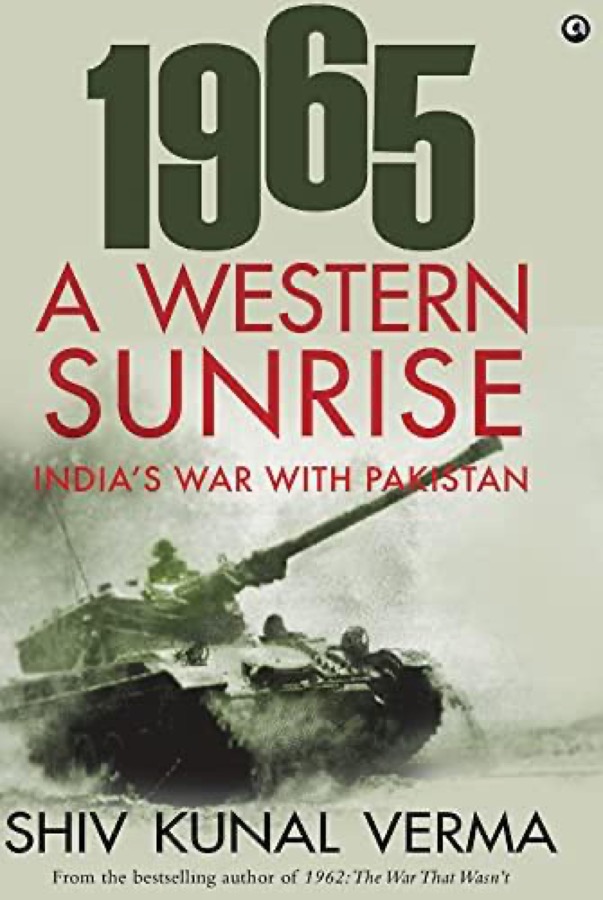
1965, month by month
The war this shelf covers moved north along the western frontier over eight months, from the salt flats of Kutch to the plains of Punjab.
- February to May
The Rann of Kutch
Pakistan launches its first military probes into the Rann of Kutch, to test the waters. India responds.
- July
A stand-down
By the end of July, India gives in to the dictates of the UN and stands down the troops it had mobilised in the Punjab and Kargil sectors.
- August
Operation Gibraltar
Nearly 12,000 trained mujahids are covertly deployed into Kashmir. India repulses the attack and cuts off the entry and exit points into the Valley by capturing the Haji Pir Bulge. Gibraltar fizzles out.
- September
Operation Grand Slam, then full-scale war
Pakistan attacks in Chhamb and Jaurian. India's counter-attack shifts the fighting to the international border: Lahore, Barki, Kasur (Khem Karan), Fazilka, Sialkot and Barmer. With both air forces involved almost at once, the skirmishes become full-scale war.
- The end
A stalemate
What could have ended in victory ends in a stalemate. Official Indian figures: 12,714 casualties, of whom 2,763 were killed, 8,444 wounded and 1,507 missing.
From the jacket of 1965: A Western Sunrise
Questions for discussion
Three questions drawn from this shelf, for secondary-school and college classes. They ask students to reason from the material, not to take a side. Print this page for a one-sheet handout.
- The 1965 war opened “on multiple fronts at once”, from the Rann of Kutch through Kashmir to the plains of Punjab. Why might fighting across such different ground at the same time make a war harder to plan, and harder to end?
- The book's jacket says Pakistan expected India to “collapse just as they had against China in NEFA three years previously”. How can the memory of one war shape the decisions made in the next? Was the expectation borne out?
- The war “ended in stalemate”, and the book gives casualties as “official Indian figures”. Why would a historian name the source of a number? How might each side's account of the same stalemate differ, and how would you check them?
https://education.fortressindia.in/region/western-frontier/